Firstly, there is a quiet kind of overwhelm that settles into a home long before the counters are cluttered or the laundry piles spill over. It lives in the body. In the breath you didn’t realize you were holding. In the way you move through your rooms feeling behind, distracted, or vaguely defeated.
Secondly, many women come to gentle homemaking not because they want a more beautiful home—but because they need relief.
Thirdly, if you are overwhelmed, exhausted, or unsure where to begin, this is not a sign that you are failing at homemaking. It is often a sign that you have been carrying too much, for too long, without rhythms that support your season of life.
Gentle homemaking is not about doing less because you don’t care.
It is about doing what matters—with kindness, intention, and sustainability.
In this post we will walk you through how to create a peaceful home when you are overwhelmed, without rigid schedules, unrealistic expectations, or aesthetic pressure. Just slow, livable rhythms that bring calm back into your days.
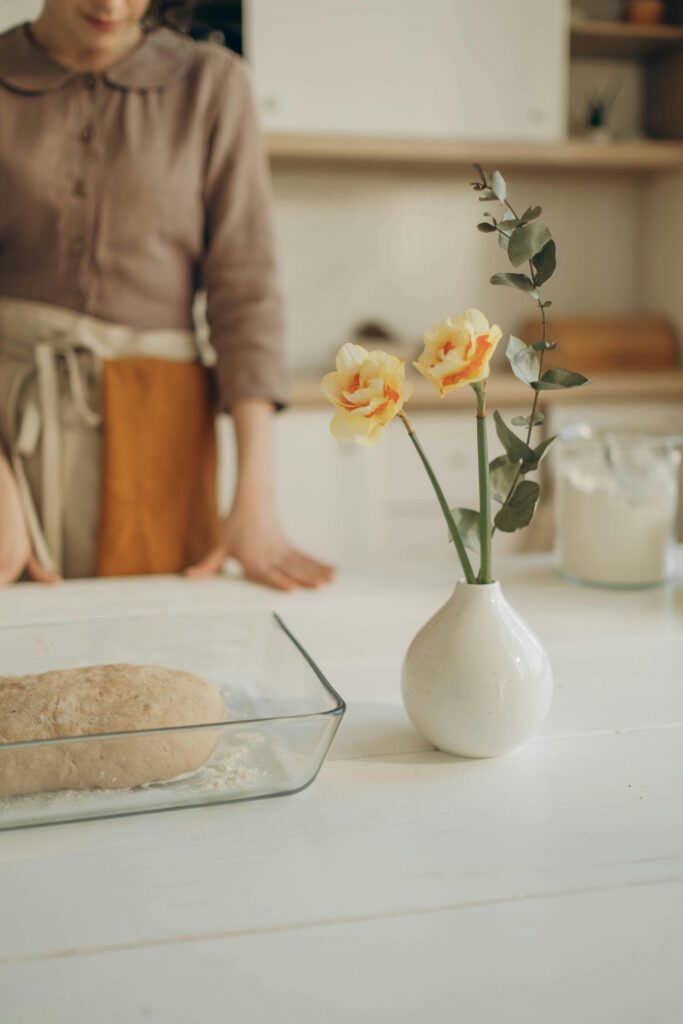
What Is Gentle Homemaking?
Gentle homemaking is the practice of tending a home in a way that supports the nervous system, honors real life, and prioritizes peace over performance.
It is not:
- A perfectly curated home
- A strict daily routine
- A checklist you must keep up with no matter the cost
It is:
- Homemaking that adapts to your energy
- Systems that serve your family—not the other way around
- Beauty that feels restful, not demanding
- Rhythms that grow with your season of life
Gentle homemaking recognizes that a peaceful home is built slowly—through small choices repeated with care.
Why Overwhelm Happens at Home
Before we talk about solutions, it helps to understand why overwhelm creeps in so easily.
1. Too Many Expectations
Modern homemakers are often influenced by:
- Social media perfection
- Productivity culture
- Pressure to “do it all” beautifully
When expectations outpace capacity, burnout follows.
2. Homes Without Rhythms
Without simple rhythms, every task feels urgent and unfinished. Decision fatigue builds, and even small chores feel heavy.
3. No Margin for Rest
When homemaking becomes constant motion without pause, the home begins to feel like a workplace instead of a refuge.
Gentle homemaking begins by releasing what was never meant to be carried.
The Foundation of a Peaceful Home: Start With Your Nervous System
A calm home does not begin with decluttering—it begins with regulation.
Before changing your systems, tend to your body.
Try this:
- Open a window
- Take three slow breaths
- Light a candle in the room you’re in
- Put your feet on the floor and notice where you are
Your home does not need to be fixed before you can feel peace. Often, peace creates clarity.
Gentle Homemaking Rhythm #1: Choose One Anchor Task Per Day
If you are overwhelmed, trying to “catch up” often backfires.
Therefore, choose one anchor task—a single homemaking practice that grounds your day.
Examples:
- Resetting the kitchen after breakfast
- A slow afternoon tidy
- Starting a load of laundry and finishing it completely
- Preparing a simple evening meal
This anchor becomes your daily win. Everything else is optional.
Over time, consistency creates calm—not volume.
Gentle Homemaking Rhythm #2: Declutter What You Touch Every Day
Decluttering does not need to be dramatic or exhausting.
Start with high-touch areas:
- Kitchen counters
- Entryway
- Bathroom sink
- Bedside tables
Ask one question:
Does this support our daily life—or distract from it?
In other words, removing visual noise is one of the fastest ways to create a peaceful home when you’re overwhelmed.
Gentle Homemaking Rhythm #3: Create Soft Transitions in Your Day
Homes feel chaotic when days blur together.
Gentle homemaking introduces soft transitions:
- Morning light through opened curtains
- Midday tea or quiet time
- Evening lamps instead of overhead lighting
- A short reset before bedtime
These transitions signal safety and closure—to both mothers and children.
Slow Living With Children: Peaceful Homes Are Learned Together
If you have children, gentle homemaking includes them—but not as helpers who must perform.
Children learn peace through:
- Predictable rhythms
- Calm tones
- Simple expectations
- Time to linger
A peaceful home with children is not silent.
It is secure.
Moreover, instead of enforcing constant order, focus on:
- One family tidy time
- Fewer toys, rotated slowly
- Cozy spaces for rest and creativity
Simple Homemaking Routines That Won’t Burn You Out
Gentle routines are flexible and forgiving.
Try this framework:
- Daily: Dishes, one reset, one anchor task
- Weekly: Laundry flow, light cleaning, planning
- Seasonal: Decluttering, deep cleaning, rhythm shifts
Likewise, if a routine feels heavy, it’s not gentle enough.
Beauty as a Tool for Peace (Not Pressure)
Beauty in gentle homemaking is meant to restore, not impress.
Think:
- Natural light
- Linen textures
- A bowl of fruit
- Fresh air
- Handmade objects with stories
Choose beauty that ages well and asks little of you.
If You’re Still Overwhelmed: Start Smaller
However, if everything feels like too much:
- Wash one dish
- Make one cup of tea
- Clear one surface
- Sit in one quiet room
Gentle homemaking honors the smallest beginnings.
FAQ: Gentle Homemaking & Peaceful Homes
What if I don’t have time for gentle homemaking?
Gentle homemaking is not something extra—it replaces unsustainable systems with softer ones.
Can gentle homemaking work in a small or messy home?
Yes. Peace is created through rhythm, not square footage.
How do I stay consistent when life is unpredictable?
Gentle homemaking adapts. Consistency comes from returning—not perfection.
Is gentle homemaking the same as slow living?
They overlap. Therefore, gentle homemaking focuses specifically on the home and daily rhythms.
In Conclusion, A Peaceful Home Is Built Slowly
You do not need to overhaul your home to create peace.
You need:
- Fewer expectations
- Kinder rhythms
- Space to breathe
Gentle homemaking is an invitation—to tend your home the way you would tend a garden. Slowly. Patiently. With trust that growth happens in its own time.
Your home can be a place of rest again.
Not someday—now, in small, faithful steps.


Leave A Comment