There is a quiet ache many homeschooling mothers carry but rarely name.
You wanted a slower life.
A peaceful home.
Learning that felt meaningful instead of rushed.
Yet somewhere between breakfast dishes, math lessons, emotional meltdowns, laundry piles, and the constant mental load of motherhood… homeschooling began to feel heavy.
Not because you don’t love your children.
Not because you don’t believe in home education.
But because you are tired of trying to hold everything together at once.
This is where gentle homeschooling rhythms offer something radically different—not another system to manage, but a way to breathe again.
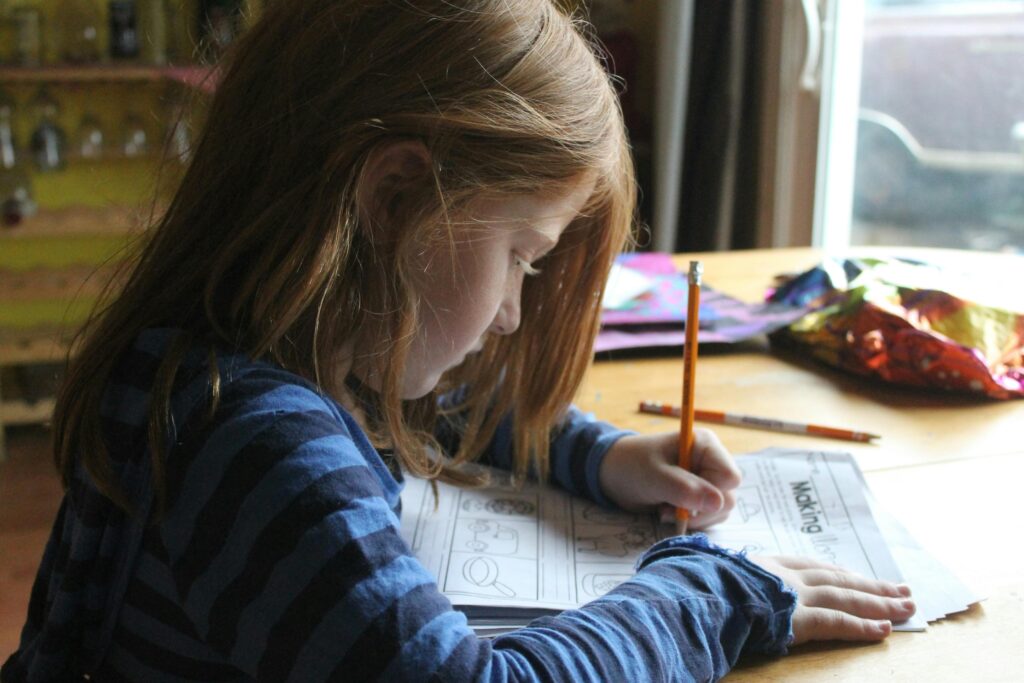
What Gentle Homeschooling Rhythms Really Mean
Gentle homeschooling rhythms are not schedules carved in stone.
They are not hour-by-hour planners or color-coded charts.
They are repeating patterns that create safety, flow, and calm—for both mother and child.
A rhythm says:
“This comes next.”
Not:
“You’re behind.”
Rhythms anchor learning inside the natural movement of your day instead of forcing your day to bend around school.
Think of them as the exhale after years of holding your breath.
Why Overwhelmed Mothers Need Rhythms, Not Rigid Schedules
When you are overwhelmed, your nervous system is already stretched thin.
Rigid schedules demand constant decision-making, clock-watching, and self-correction. Rhythms, on the other hand:
- Reduce decision fatigue
- Create predictable flow without pressure
- Support emotional regulation
- Allow flexibility during hard seasons
- Center connection over completion
A rhythm doesn’t ask, “Did we do enough today?”
It gently asks, “Did we show up?”
And most days, that is enough.
The Hidden Cost of Hustle-Style Homeschooling
Many homeschooling mothers unknowingly recreate the very systems they hoped to escape.
- Rushed mornings
- Piles of unfinished work
- Constant guilt
- Comparison-driven productivity
- Burnout masked as “discipline”
Children feel it. Mothers feel it deeper.
Gentle homeschooling rhythms interrupt this cycle by aligning learning with real life, not idealized expectations.
The Heart of Calm Homeschooling Routines
At the core of calm homeschooling routines is one simple truth:
Children learn best when mothers feel safe and supported.
Peaceful learning does not require perfect lessons.
It requires regulated adults and predictable days.
Gentle rhythms help you show up steadier—even when life is loud.
How to Build Gentle Homeschooling Rhythms (Step by Step)
1. Anchor Your Day Around Natural Transitions
Instead of scheduling subjects, anchor learning to moments that already exist:
- Morning light
- Mealtimes
- Outdoor breaks
- Afternoon rest
- Evening wind-down
For example:
- Read aloud after breakfast
- Math before lunch
- Nature study during afternoon walks
Learning flows because life is already moving there.
2. Choose Consistency Over Quantity
A gentle rhythm values returning daily over doing everything.
- One math page done peacefully > five rushed pages
- One read-aloud chapter > a forced reading marathon
- One consistent habit > endless curriculum changes
Small, repeated acts build confidence—for you and your children.
3. Protect the Morning, Soften the Afternoon
Mornings tend to hold the most emotional capacity.
Use that time for:
- Reading
- Writing
- Math
- Skill-building
Afternoons are for:
- Hands-on learning
- Creative work
- Nature exploration
- Quiet play
This honors your energy instead of fighting it.
Gentle Homeschooling Rhythms for Different Seasons of Motherhood
For Mothers of Young Children
- Short lessons
- Frequent movement
- Story-based learning
- Learning through daily life
Your rhythm might look like:
Breakfast → Read-aloud → Play → Lunch → Rest → Art
For Mothers with Mixed Ages
- Group learning where possible
- Independent work blocks
- One-on-one time rotated through the week
Gentle doesn’t mean unstructured—it means sustainable.
For Burned-Out Mothers
This season requires grace.
- Reduce subjects
- Focus on reading and math
- Let beauty and curiosity lead
- Release unrealistic expectations
Your healing matters as much as their education.
Creating a Peaceful Learning Environment at Home
Your physical space supports your rhythm more than you realize.
You don’t need a classroom. You need calm.
- Declutter learning areas
- Keep supplies simple and accessible
- Add beauty: linen textures, wood, soft light
- Create cozy reading spaces
A peaceful environment invites children into learning instead of pushing them toward it.
Gentle Homeschooling With Children Who Learn Differently
Gentle homeschooling rhythms are especially supportive for:
- Sensitive children
- Neurodivergent learners
- Children recovering from academic stress
Slow learning allows:
- Time to process
- Emotional safety
- Deep understanding
Progress may look quieter—but it runs deeper.
Letting Go of Comparison (The Quiet Work of Gentle Homeschooling)
Gentle homeschooling asks you to release comparison—especially online.
Your rhythm does not need to match:
- Another family’s routine
- Another child’s pace
- Another mother’s capacity
The goal is not to replicate someone else’s homeschool.
The goal is to protect your home’s peace.
FAQ: Gentle Homeschooling Rhythms
What if we fall behind?
Behind what? Gentle homeschooling measures growth in understanding, not pace.
Can rhythms still include structure?
Yes. Rhythms are structured—but flexible. They offer predictability without rigidity.
How long does it take to feel calmer?
Many mothers notice relief within weeks once expectations soften and flow returns.
Is gentle homeschooling effective academically?
Absolutely. Children thrive when learning feels safe, consistent, and meaningful.
What if my children resist gentle rhythms?
Resistance often fades once pressure is removed and trust is rebuilt.
From Survival to Sacred Daily Life
Gentle homeschooling rhythms are not about doing less out of failure.
They are about doing what matters—on purpose.
They remind us that education is not a race.
That learning can be slow.
That motherhood was never meant to be carried alone or rushed through.
You are not behind or failing.
You are building something beautiful—one gentle day at a time.


Leave A Comment